Ikigai in Practice: Real Examples
(Illustrative composites — not real individuals)
The Career-Changer
A former high school teacher who loved mentoring but was burnt out by admin work. She realised her Ikigai wasn’t “teaching” specifically — it was guiding people through change. That insight led her toward a career coaching role, using AI tools to handle the admin she never enjoyed, and spending her energy on the coaching conversations that actually lit her up.
The Mature-Age Jobseeker
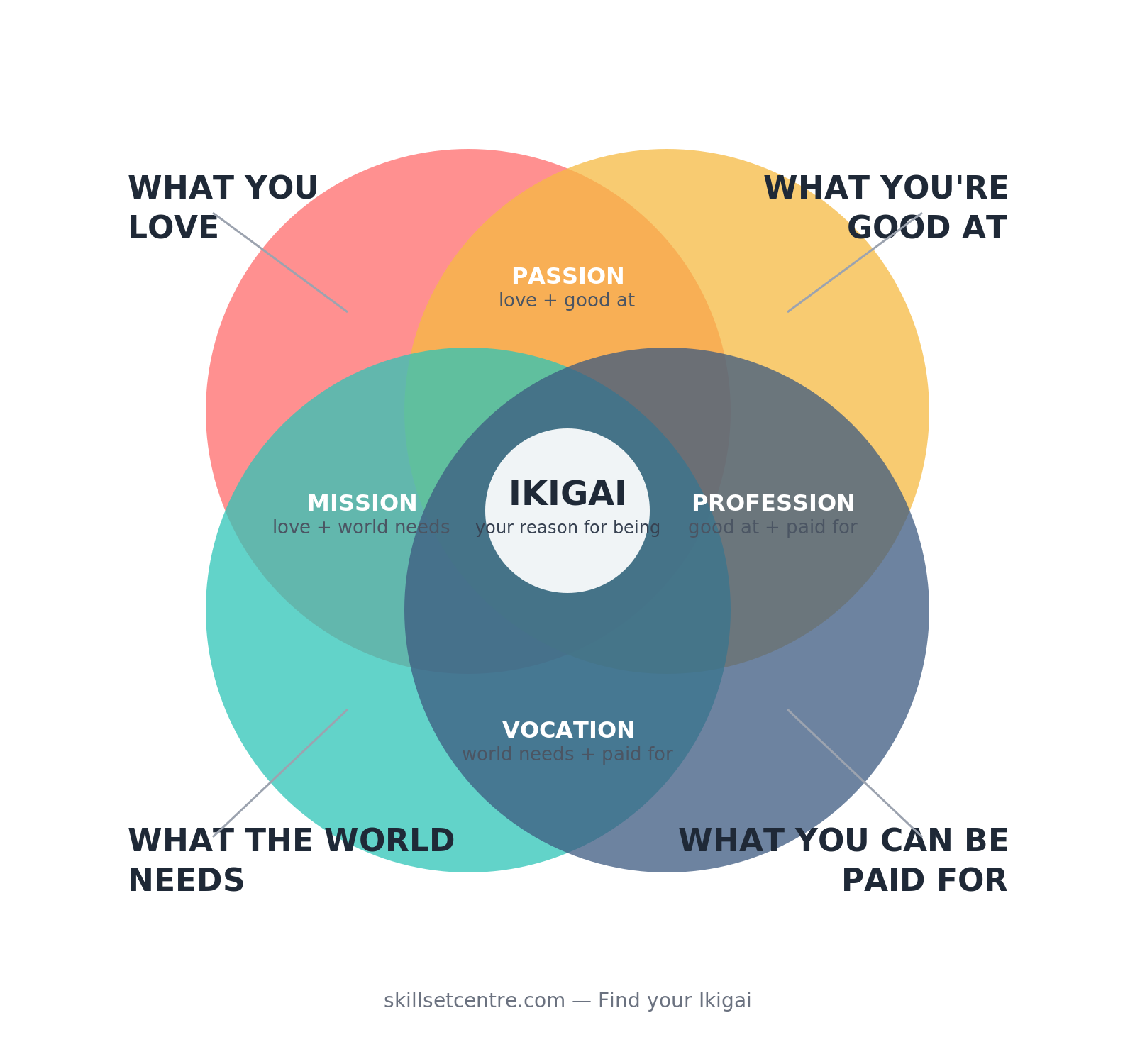
A 58-year-old engineer made redundant after 20 years assumed his skills were “outdated.” Mapping his four circles showed his real strength wasn’t a specific software package — it was solving complex operational problems under pressure. That reframe helped him target roles in project delivery, where decades of judgement matter more than which tools are trendy this year.
The Recent Graduate
A graduate overwhelmed by “which career should I pick?” used this framework to separate what pays well, what she’s good at, and what she actually enjoys — three things she’d been treating as one confusing blob. Separating them made her job search dramatically more focused.
Frequently Asked Questions
Is Ikigai the same as “finding your passion”?
Not quite. Passion is only one of the four circles. It also requires that your passion connects to a real skill, a real need, and a way to sustain yourself — which is what makes it more practical than “follow your passion” alone.
Do I need to change careers to live my Ikigai?
No. Many people find it within their current role by reframing how they do the work, or by shifting focus toward the parts of the job that genuinely overlap with what they love and are good at.
How does AI change how I should think about this?
AI is best at automating tasks, not purpose. Understanding this helps you focus your energy — and your upskilling — on the parts of work that stay distinctly human and valuable.
How long does the Ikigai Test take?
Just a few minutes. Take it here →
What kind of career suggestions will I get?
A mix of traditional and emerging roles across six broad interest areas — hands-on trades, care and community work, creative and technical fields, business, operations, and analysis. The examples are grounded in real labour-market data, including Jobs and Skills Australia’s emerging-occupations research, so you’ll see options like renewable energy technicians and cybersecurity analysts alongside more familiar roles — not just office or IT-heavy suggestions.